In search of the best AI humanizer? An AI humanizer is software that uses machine learning to help you get more done — it turns a rough idea into a polished result in seconds. When choosing one, weigh output quality, pricing, export formats, and how well it fits the tools you already use. Whether you are a beginner or a pro, the right AI humanizer slots into your workflow and pays for itself fast. We tested the leading options and ranked them by quality, value, and ease of use.
Hugging Face
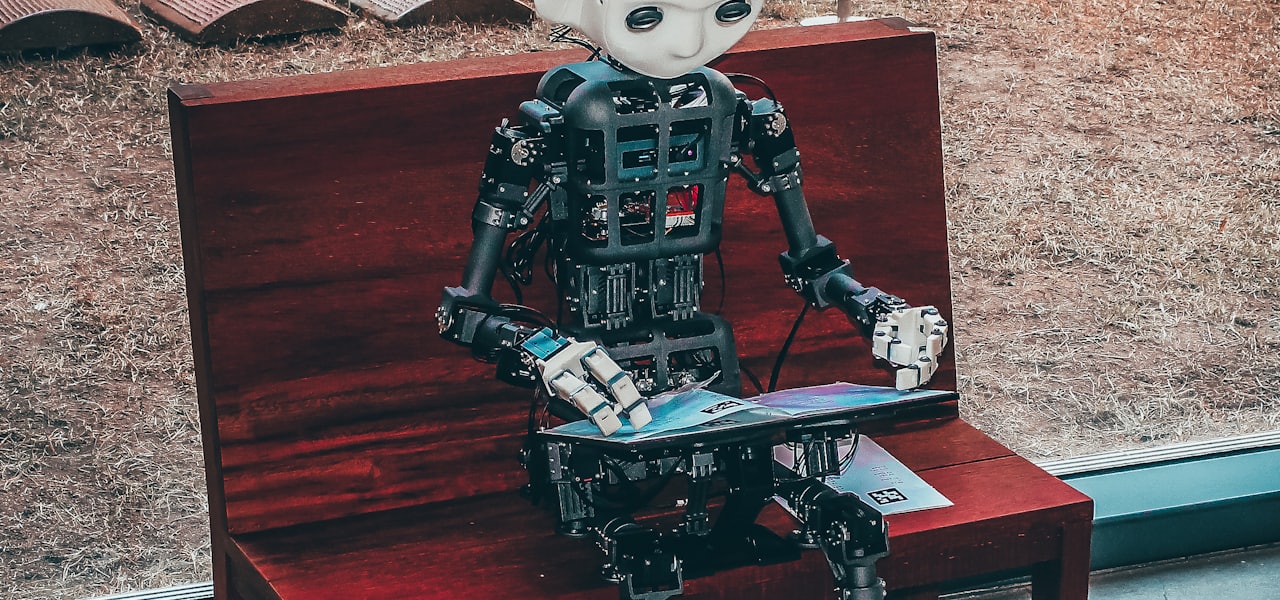
Hugging Face, Inc., is an American company based in New York City that develops computation tools for building applications using machine learning. Its transformers library built for natural language processing applications and its platform allow users to share machine learning models and datasets and showcase their work. == History == === Founding === The company was founded in 2016 by French entrepreneurs Clément Delangue, Julien Chaumond, and Thomas Wolf in New York City, originally as a company that developed a chatbot app targeted at teenagers. The company was named after the U+1F917 🤗 HUGGING FACE emoji. After open sourcing the model behind the chatbot, the company pivoted to focus on being a platform for machine learning. === AI boom === On April 28, 2021, the company launched the BigScience Research Workshop in collaboration with several other research groups to release an open large language model. In 2022, the workshop concluded with the announcement of BLOOM, a multilingual large language model with 176 billion parameters. In February 2023, the company announced partnership with Amazon Web Services (AWS) which would allow Hugging Face's products to be available to AWS customers to use them as the building blocks for their custom applications. The company also said the next generation of BLOOM will be run on Trainium, a proprietary machine learning chip created by AWS. In June 2024, the company announced, along with Meta and Scaleway, their launch of a new AI accelerator program for European startups. The initiative aimed to help startups integrate open foundation models into their products, accelerating the EU AI ecosystem. The program, based at STATION F in Paris, ran from September 2024 to February 2025. Selected startups received mentoring, and access to AI models and tools and Scaleway's computing power. On September 23, 2024, to further the International Decade of Indigenous Languages, Hugging Face teamed up with Meta and UNESCO to launch a new online language translator. It was built on Meta's No Language Left Behind open-source AI model, enabling free text translation across 200 languages, including many low-resource languages. In April 2025, Hugging Face announced that they acquired a humanoid robotics startup, Pollen Robotics, based in France and founded by Matthieu Lapeyre and Pierre Rouanet in 2016. In an X tweet, Delangue shared his vision to "make Artificial Intelligence robotics Open Source". === Cyberattacks === In early 2026, hackers hijacked the Hugging Face platform to launch Android-targeted attacks involving "powerful malware" which could completely take over a compromised target.
Asian Digital Finance Forum & Awards
Asian Digital Finance Forum & Awards (also known as Asian Digital Finance Forum and Awards) is a forum and honorary awards platform convened in Colombo, Sri Lanka. It has been hosted in a hybrid format (virtual and in-person), with editions reported in 2022, 2023 and 2025. The event is organised by the Asian FinTech Academy (AFTA) in collaboration with a number of local and international institutions. == Overview == The forum has featured international academic, industry, and policy speakers and has recognised institutions and individuals for contributions related to digital finance and fintech innovation. Media coverage has described participation and recognition at the forum as spanning multiple regions, with institutions and individuals from South Asia, Southeast Asia, East Asia, the Middle East, Europe, and North America featured across different editions. == Awards and recognition == The forum and awards were held in a hybrid format with virtual and in-person proceedings at Hilton Colombo in the 2022 and 2023 editions. The Asian Digital Finance Forum & Awards presents honorary recognitions to institutions and individuals for contributions to digital finance, financial inclusion, and related regulatory, technological, and policy developments. Media coverage has described the recognitions as non-competitive and based on demonstrated leadership and impact rather than open nominations. In 2025, the forum and awards served as an anchor initiative associated with the Asia International Digital Economy & AI in Finance Summit at Port City Colombo, with an emphasis on artificial intelligence in finance, financial inclusion, and governance-related themes. === 2022 === According to reporting by Daily FT, institutions recognised at the 2022 edition included Sri Lanka’s Bank of Ceylon, Commercial Bank of Ceylon, Hatton National Bank, and People’s Bank, alongside international organisations and fintech-sector contributors. === 2023 === Coverage of the 2023 forum described recognitions awarded to India’s International Financial Services Centres Authority (IFSCA) for regulatory innovation, as well as to digital finance and payments platforms including Dialog Genie and SLT-Mobitel mCash. IDEMIA’s Asia–Pacific operations were also recognised for contributions related to biometric and digital identity technologies in financial services. === 2025 === For the 2025 edition, institutional honourees reported in the media included Nium (Singapore), recognised for cross-border payments optimisation, and Paytm (India), recognised for AI-powered financial inclusion initiatives. A Visionary Award for Next-Generation Financial Hub Development was presented to Port City Colombo in recognition of its fintech- and AI-oriented development strategy. Individual honourees reported for 2025 included Sopnendu Mohanty (Singapore), Neil Tan (Hong Kong), Purvi Munot (United Arab Emirates), and Amira Abdelaziz (Egypt), recognised for contributions spanning fintech governance, ecosystem development, inclusive wealth technology, and AI-driven financial policy and regulation. In 2025, media reports described the awards as being subject to an independent validation framework. The process was led by Dr. Sivaguru S. Sritharan, appointed as Global Validation Chair, and involved independent research, analytical review, and benchmarking against international standards, with recognitions characterised as honorary and non-competitive.
Question (short story)
"Question" is a science fiction short story by American writer Isaac Asimov. The story first appeared in the March 1955 issue of Computers and Automation (thought to be the first computer magazine), and was reprinted in the April 30, 1957, issue of Science World. It is the first of a loosely connected series of stories concerning a fictional supercomputer called Multivac. The story concerns two technicians who are servicing Multivac, and their argument over whether or not the machine is truly intelligent and able to think. Multivac, however, supplies the answer on its own. After the reprint, another author, Robert Sherman Townes, noticed the climax in the last sentence was very similar to one of his own stories, "Problem for Emmy" (Startling Stories, June 1952), and wrote to Asimov about it. After searching in his library, Asimov did find the original story and, although he did not recall having read it, admitted that the endings were pretty similar. He then replied to Townes, apologizing and promising the story would never again be published, and it never was. Asimov mentioned "Question" in an editorial called "Plagiarism" which appeared in the August 1985 issue of Asimov's Science Fiction (although he did not mention Townes' name or the title of either story). "Plagiarism" was reprinted in Asimov's collection Gold (1995).
IJCAI Award for Research Excellence
The IJCAI Award for Research Excellence is a biannual award before given at the IJCAI conference to researcher in artificial intelligence as a recognition of excellence of their career. Beginning in 2016, the conference is held annually and so is the award. == Laureates == The recipients of this award have been: John McCarthy (1985) Allen Newell (1989) Marvin Minsky (1991) Raymond Reiter (1993) Herbert A. Simon (1995) Aravind Joshi (1997) Judea Pearl (1999) Donald Michie (2001) Nils Nilsson (2003) Geoffrey E. Hinton (2005) Alan Bundy (2007) Victor R. Lesser (2009) Robert Kowalski (2011) Hector Levesque (2013) Barbara Grosz (2015) for her pioneering research in Natural Language Processing and in theories and applications of Multiagent Collaboration. Michael I. Jordan (2016) for his groundbreaking and impactful research in both the theory and application of statistical machine learning. Andrew Barto (2017) for his pioneering work in the theory of reinforcement learning. Jitendra Malik (2018) Yoav Shoham (2019) Eugene Freuder (2020) Richard S. Sutton (2021) Stuart J. Russell (2022) Sarit Kraus (2023) for her pioneering work of the study of interactions among self-interested agents, creating the field of automated negotiation, and developing methods for coalition formation and teamwork, both as formal models and real-world implementations. == Winners of also Turing Award == John McCarthy (1971) Allen Newell (1975) Marvin Minsky (1969) Herbert A. Simon (1975) Judea Pearl (2011) Geoffrey Hinton (2018) Andrew Barto (2024) Richard S. Sutton (2024)
Deep learning
In machine learning, deep learning (DL) focuses on utilizing multilayered neural networks to perform tasks such as classification, regression, and representation learning. The field takes inspiration from biological neuroscience and revolves around stacking artificial neurons into layers and "training" them to process data. The adjective "deep" refers to the use of multiple layers (ranging from three to several hundred or thousands) in the network. Methods used can be supervised, semi-supervised or unsupervised. Some common deep learning network architectures include fully connected networks, deep belief networks, recurrent neural networks, convolutional neural networks, generative adversarial networks, transformers, and neural radiance fields. These architectures have been applied to fields including computer vision, speech recognition, natural language processing, machine translation, bioinformatics, drug design, medical image analysis, climate science, material inspection and board game programs, where they have produced results comparable to and in some cases surpassing human expert performance. Early forms of neural networks were inspired by information processing and distributed communication nodes in biological systems, particularly the human brain. However, current neural networks do not intend to model the brain function of organisms, and are generally seen as low-quality models for that purpose. == Overview == Most modern deep learning models are based on multi-layered neural networks such as convolutional neural networks and transformers, although they can also include propositional formulas or latent variables organized layer-wise in deep generative models such as the nodes in deep belief networks and deep Boltzmann machines. Fundamentally, deep learning refers to a class of machine learning algorithms in which a hierarchy of layers is used to transform input data into a progressively more abstract and composite representation. For example, in an image recognition model, the raw input may be an image (represented as a tensor of pixels). The first representational layer may attempt to identify basic shapes such as lines and circles, the second layer may compose and encode arrangements of edges, the third layer may encode a nose and eyes, and the fourth layer may recognize that the image contains a face. Importantly, a deep learning process can learn which features to optimally place at which level on its own. Prior to deep learning, machine learning techniques often involved hand-crafted feature engineering to transform the data into a more suitable representation for a classification algorithm to operate on. In the deep learning approach, features are not hand-crafted and the model discovers useful feature representations from the data automatically. This does not eliminate the need for hand-tuning; for example, varying numbers of layers and layer sizes can provide different degrees of abstraction. The word "deep" in "deep learning" refers to the number of layers through which the data is transformed. More precisely, deep learning systems have a substantial credit assignment path (CAP) depth. The CAP is the chain of transformations from input to output. CAPs describe potentially causal connections between input and output. For a feedforward neural network, the depth of the CAPs is that of the network and is the number of hidden layers plus one (as the output layer is also parameterized). For recurrent neural networks, in which a signal may propagate through a layer more than once, the CAP depth is potentially unlimited. No universally agreed-upon threshold of depth divides shallow learning from deep learning, but most researchers agree that deep learning involves CAP depth higher than two. CAP of depth two has been shown to be a universal approximator in the sense that it can emulate any function. Beyond that, more layers do not add to the function approximator ability of the network. Deep models (CAP > two) are able to extract better features than shallow models and hence, extra layers help in learning the features effectively. Deep learning architectures can be constructed with a greedy layer-by-layer method. Deep learning helps to disentangle these abstractions and pick out which features improve performance. Deep learning algorithms can be applied to unsupervised learning tasks. This is an important benefit because unlabeled data is more abundant than labeled data. Examples of deep structures that can be trained in an unsupervised manner are deep belief networks. The term deep learning was introduced to the machine learning community by Rina Dechter in 1986, and to artificial neural networks by Igor Aizenberg and colleagues in 2000, in the context of Boolean threshold neurons. The etymology of the term is more complicated. == Interpretations == Deep neural networks are generally interpreted in terms of the universal approximation theorem or probabilistic inference. The classic universal approximation theorem concerns the capacity of feedforward neural networks with a single hidden layer of finite size to approximate continuous functions. In 1989, the first proof was published by George Cybenko for sigmoid activation functions and was generalised to feed-forward multi-layer architectures in 1991 by Kurt Hornik. Recent work also showed that universal approximation also holds for non-bounded activation functions such as Kunihiko Fukushima's rectified linear unit. The universal approximation theorem for deep neural networks concerns the capacity of networks with bounded width but the depth is allowed to grow. Lu et al. proved that if the width of a deep neural network with ReLU activation is strictly larger than the input dimension, then the network can approximate any Lebesgue integrable function; if the width is smaller or equal to the input dimension, then a deep neural network is not a universal approximator. The probabilistic interpretation derives from the field of machine learning. It features inference, as well as the optimization concepts of training and testing, related to fitting and generalization, respectively. More specifically, the probabilistic interpretation considers the activation nonlinearity as a cumulative distribution function. The probabilistic interpretation led to the introduction of dropout as regularizer in neural networks. The probabilistic interpretation was introduced by researchers including Hopfield, Widrow and Narendra and popularized in surveys such as the one by Bishop. == History == === Before 1980 === There are two types of artificial neural network (ANN): feedforward neural network (FNN) or multilayer perceptron (MLP) and recurrent neural networks (RNN). RNNs have cycles in their connectivity structure, whereas FNNs do not. In the 1920s, Wilhelm Lenz and Ernst Ising created the Ising model which is essentially a non-learning RNN architecture consisting of neuron-like threshold elements. In 1972, Shun'ichi Amari made this architecture adaptive. His learning RNN was republished by John Hopfield in 1982. Other early recurrent neural networks were published by Kaoru Nakano in 1971. Already in 1948, Alan Turing produced work on "Intelligent Machinery" that was not published in his lifetime, containing "ideas related to artificial evolution and learning RNNs". Frank Rosenblatt (1958) proposed the perceptron, an MLP with 3 layers: an input layer, a hidden layer with randomized weights that did not learn, and an output layer. He later published a 1962 book that also introduced variants and computer experiments, including a version with four-layer perceptrons "with adaptive preterminal networks" where the last two layers have learned weights (here he credits H. D. Block and B. W. Knight). The book cites an earlier network by R. D. Joseph (1960) "functionally equivalent to a variation of" this four-layer system (the book mentions Joseph over 30 times). Should Joseph therefore be considered the originator of proper adaptive multilayer perceptrons with learning hidden units? Unfortunately, the learning algorithm was not a functional one, and fell into oblivion. The first working deep learning algorithm was the Group method of data handling, a method to train arbitrarily deep neural networks, published by Alexey Ivakhnenko and Lapa in 1965. They regarded it as a form of polynomial regression, or a generalization of Rosenblatt's perceptron to handle more complex, nonlinear, and hierarchical relationships. A 1971 paper described a deep network with eight layers trained by this method, which is based on layer by layer training through regression analysis. Superfluous hidden units are pruned using a separate validation set. Since the activation functions of the nodes are Kolmogorov-Gabor polynomials, these were also the first deep networks with multiplicative units or "gates". The first deep learning multilayer perceptron trained by stochastic gradient descent was published in 1967 by Shun'ichi
A Very Fatal Murder
A Very Fatal Murder is a podcast produced by the satirical publication The Onion. A parody of true crime podcasts, A Very Fatal Murder is hosted by fictional New York City reporter David Pascall, who travels to the small town Bluff Springs, Nebraska to investigate the murder of prom queen Hayley Price. Pascall is voiced by David Sidorov, who also wrote for the podcast. The podcast premiered on January 23, 2018, and consists of 7 episodes. Season 2 was released in its entirety on May 11, 2019. == Production == A Very Fatal Murder satirizes popular true crime podcasts such as Serial, S-Town, and My Favorite Murder. According to head writer Katy Yeiser, the podcast is not meant as a take down of any particular podcast, but rather an ode to the genre. == Synopsis == The podcast follows fictional investigative reporter David Pascall (voiced by David Sidorov) who is searching for the perfect murder to create an award-winning podcast about. He is assisted by ETHL (the Extremely Timely Homicide Locator), an MIT-created computer programmed to find "the most interesting, violent, culturally relevant murder cases in America". == Episodes == === Season 1 === === Season 2 === == Reception == The podcast received mostly positive reviews, and was largely praised for attacking true-crime tropes such as the "hot dead girl" and the romanticization of small-town America. === Awards ===